
CHAPS
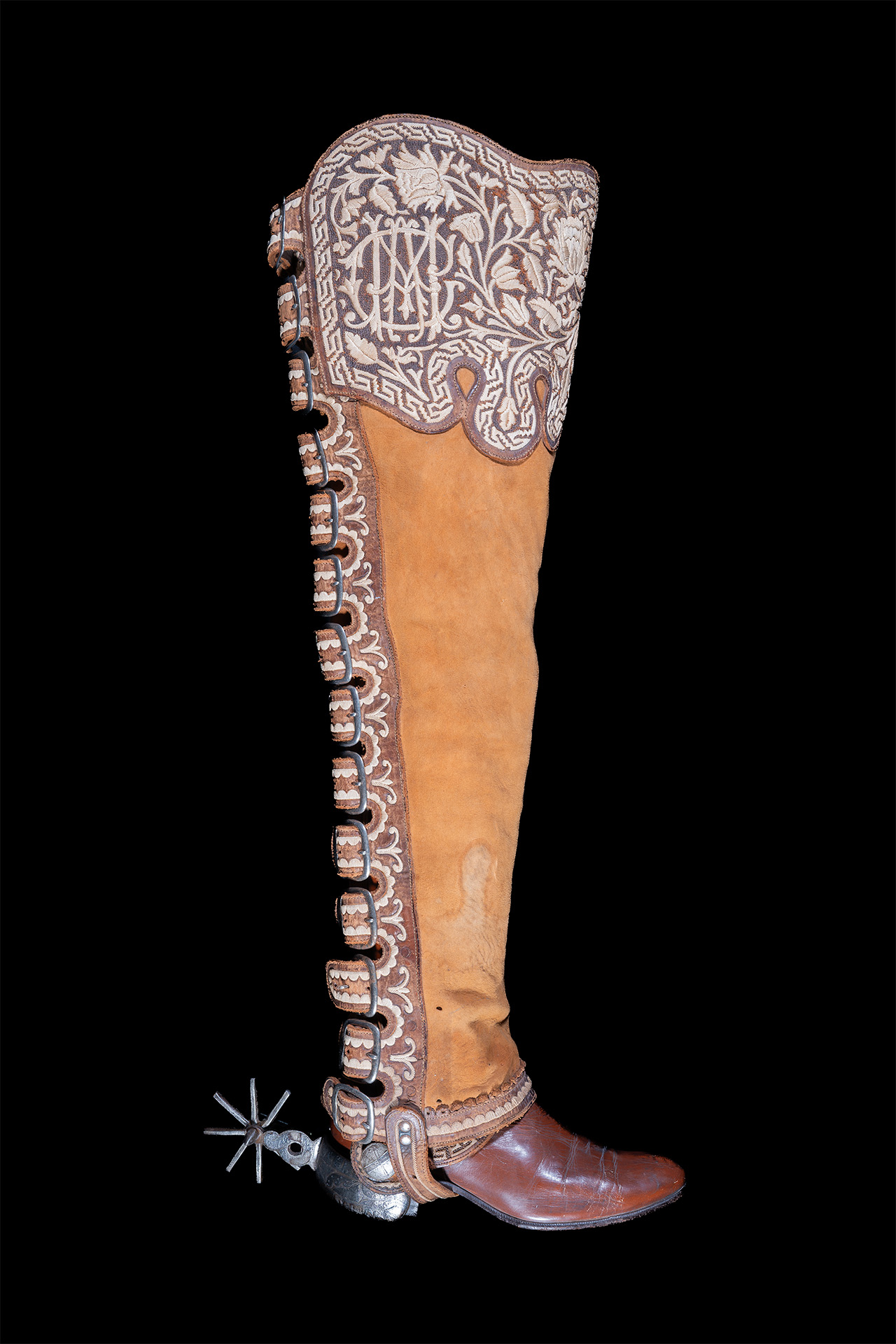
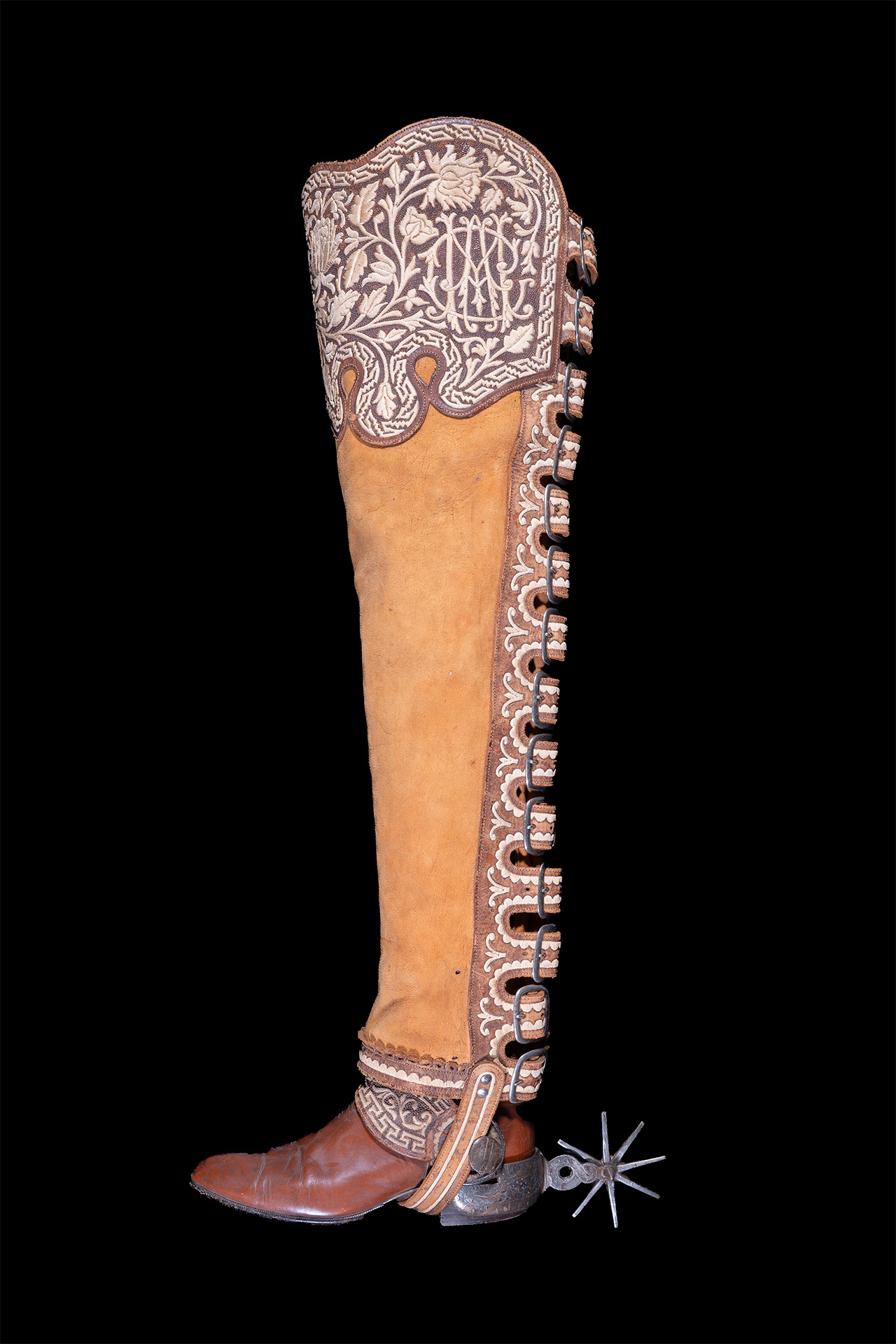
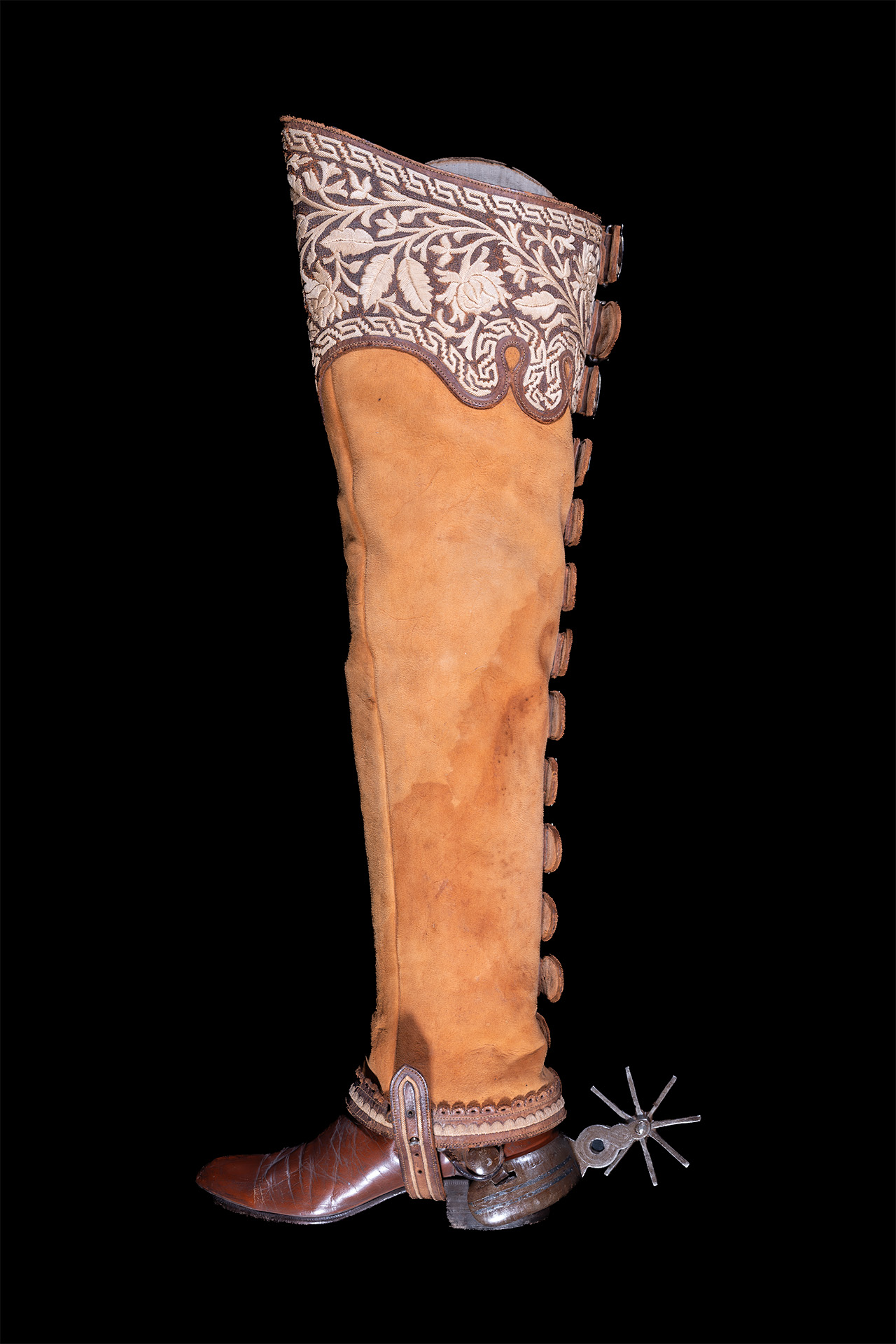
The chaps with Booty and Spurs exhibited at the Museo de la Charrería, are outstanding pieces that attract a lot of attention. Undoubtedly the most famous image associated with chaps is that of Francisco Villa. His depiction in photographs and films, wearing chaps not only illustrates their practical use during the Mexican Revolution, but also symbolizes the caudillo's resistance and strength. This representation has endured as an emblem of Mexican revolutionary and equestrian identity.
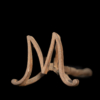
These pieces have a piteado monogram with the initials MCA and details of roses. These characteristics indicate that they were part of a complete outfit and even a saddle, reflecting both the functionality and aesthetics of traditional charro clothing.
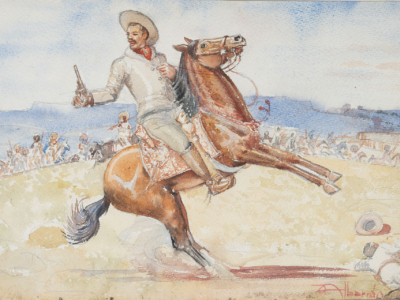
General Francisco Villa. Watercolor. José Albarrán Pliego Collection, Charrería Museum CDMX.
Origin and Use
Mitazas began to be used in Mexico during the 19th century, when riders required additional protection for their legs as they rode through rugged terrain and faced various weather conditions. These thick leather pieces, covering from thigh to ankle, protected the rider's legs from chafing, bumps and inclement weather.
The use of mittens was not only limited to the charros, but were also used by cowboys and soldiers. Cavalry riders, both in times of peace and conflict, found the mittens an indispensable protective element. The inclusion of booties and spurs with the mitazas not only served to protect the foot and improve control of the horse, but also added a dimension of authority and skill to the rider.
Development and First International Reference
Mittens, as a piece of equestrian equipment, originated in Spain, where they were known as "gaiters" or "riding boots". The first documented reference to their use dates back to the 16th century, when they were used by Spanish soldiers and knights. Their adoption and adaptation in Mexico came with the Conquest and colonization, where they became a distinctive element of the Mexican charros and horsemen.
Use in European Armies
In Europe, mittens were widely used by various armies. In particular, Spanish army and cavalry troops employed mittens as part of their standard equipment. Mittens offered flexible and less rigid protection compared to full riding boots. These pieces were developed mainly in Spain, but were also seen in other European countries where cavalry played a crucial role in war conflicts.
Types of Horsemen and Historical Use
Primarily, mitazas were worn by riders engaged in cattle ranching and those who participated in charrería, Mexico's national equestrian sport. However, their use was extended to prominent historical figures, such as revolutionaries. A clear example of this is the famous caudillo Francisco Villa, whose image with mules has become an iconic image of the Mexican Revolution.
Preference for Mittens over Riding Boots
Mittens were chosen over full riding boots for several reasons:
- Flexibility and Comfort: Mittens allowed greater flexibility in the lower leg, resulting in greater comfort for the rider during long days of riding.
- Ventilation: In hot climates, such as those of Spain and later Mexico, mittens offered better ventilation than full boots, reducing the risk of skin problems caused by heat and sweat.
- Adaptability: Mittens could be combined with different types of footwear, allowing riders to adjust their clothing according to the specific needs of the terrain and tactical situation.
- Economy and Ease of Repair: They were cheaper to produce and easier to repair compared to full boots, which was an important factor during prolonged military campaigns.
Decline in the Use of Mittens
Over time, mittens began to fall into disuse, particularly after the Mexican Revolution. The modernization of equestrian clothing and equipment, as well as changes in riding techniques and the decline of armed conflicts in the region, led to a decrease in the need for this garment. By the mid-twentieth century, mitazas had become more ceremonial than practical, used mainly in charrería events and as part of traditional costumes.
Bibliographic References
To learn more about the history and use of the mitered gourds, we recommend consulting the following sources:
1. González, Arturo. "La Charrería: Cultura, Tradición e Identidad" (Charrería: Culture, Tradition and Identity), Fondo de Cultura Económica, 1998. This book offers a complete vision of the charrería and its elements, including traditional dress.
2. Pérez, José Luis. "Revolution and Equestrian: The Image of Francisco Villa". Editorial Porrúa, 2005. Focused on the revolutionary iconography and the use of equestrian clothing in the Mexican Revolution.
3. Ramirez, Manuel. "El Charro y su Mundo: Historia y Evolución". National Autonomous University of Mexico, 2002. A detailed study on the evolution of charro clothing throughout history.
4. Castells, Ricardo. "El Ejército y su Vestimenta en el Siglo de Oro". Editorial Alianza, 2003. This book offers a detailed analysis of military dress in the Spain of the Golden Age, including the use of the mitazas.
5. Smith, Robert. "European Cavalry: 1500-1800." Oxford University Press, 1995. A comprehensive study of the evolution of European cavalry, with references to mithais and their role in various armies.




 Antonio Gegundez














 EN
EN  ES
ES  ZH
ZH  FR
FR  DE
DE  IT
IT  KO
KO  JA
JA  PT
PT  TR
TR  NL
NL  HI
HI